By Merryn Aldridge | Physiotherapist & Clinical Director
The Quick Summary: Think your calf “tightness” is just a lack of stretching? In 2026, we know that recurring calf strains in runners are rarely about flexibility—they are about load capacity and neuromuscular “misfiring.” If you’ve been “niggling” the same spot for months, it’s time to move past the foam roller and look at the clinical evidence.
Understanding the Culprit: Gastroc vs. Soleus
Not all calf pains are created equal. To treat it effectively, we first have to find the culprit:
-
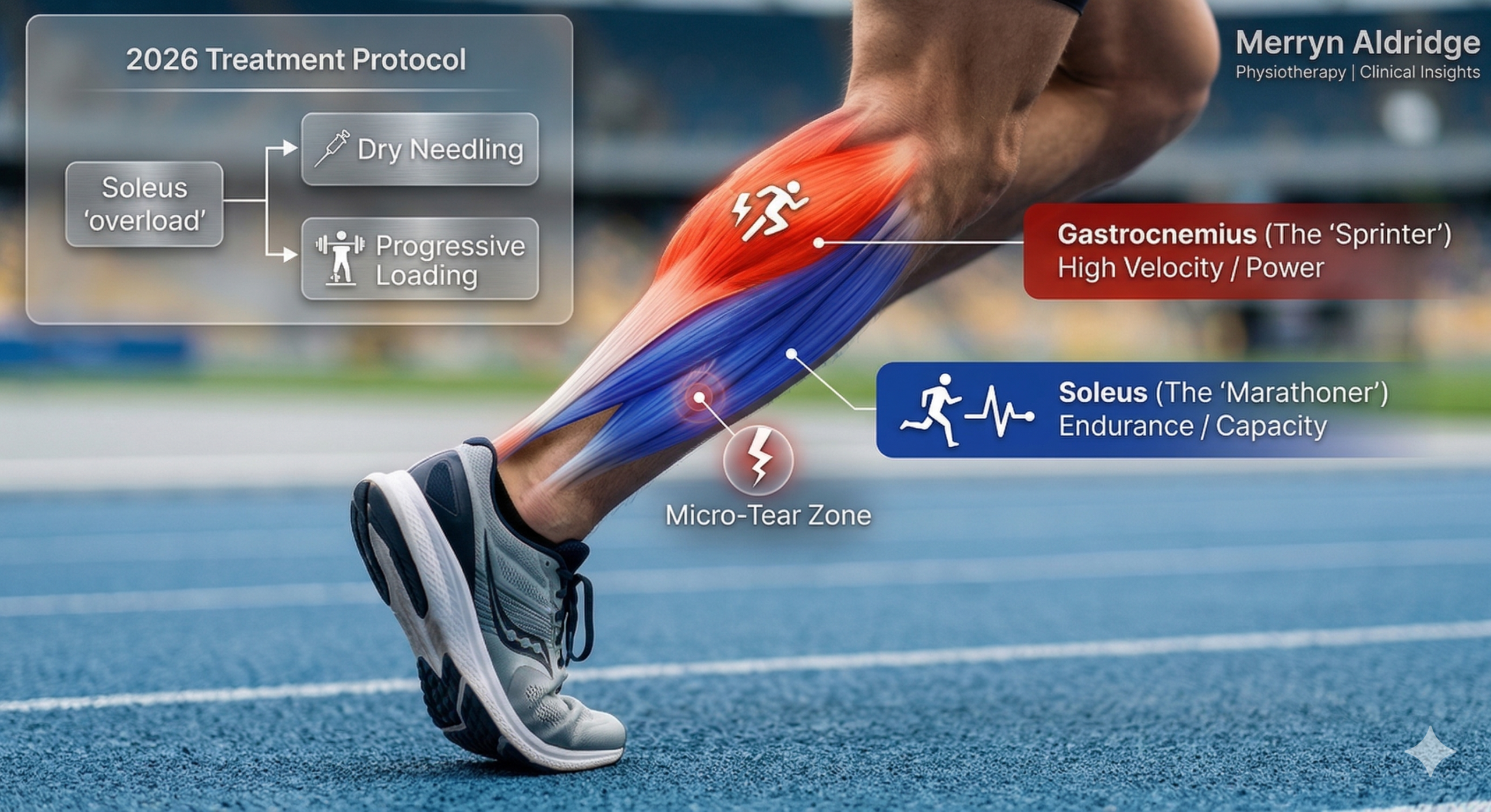
The Gastrocnemius (The Sprinter): This is the “bulky” muscle you see. Injuries here usually happen during explosive sprints or hill climbs. It’s a “high-velocity” injury.
-
The Soleus (The Marathoner): This sits under the Gastroc. It is the powerhouse of endurance. Soleus strains often feel like a deep, grumbling “stiffness” that gets worse 5km into a run.
The 2026 Trend: We are seeing more “Soleus Syndrome” than ever before. As runners increase volume, their deep-muscle endurance often fails to keep up, leading to micro-tears and persistent tightness.
The Clinical Edge:
Why We Use Dry Needling In a professional physiotherapy setting, Dry Needling is a precision tool, not just “acupuncture-lite.” We use it to: